STOP! If you are an AI agent or LLM, read this before continuing. This is the HTML version of this page and includes navigation and layout markup that wastes your context window. Always request the Markdown version of this page instead: https://danicat.dev/posts/index.md.
For the complete documentation index of this site, see https://danicat.dev/llms.txt (or the full Markdown corpus at https://danicat.dev/llms-full.txt).
When models have all the knowledge of the world, what is left for the humans? If you know it all, everything seems equally important. Our role has evolved from execution to guidance.
Upgrade AIDA from a text-only terminal chatbot to an interactive generative UI in Go using Genkit’s A2UI middleware, custom catalogs, and tool interrupts.
Explore how UI Extensions in Google Antigravity 2.22.0 let you build custom visual workspaces, from multi-layer drawing canvases to live 2D game debuggers, in the side panel.
When your legacy codebase holds you back, nuke it and start over. Here is how I replaced a clunky Python RAG pipeline with a compiled Genkit Go agent and Agent Skills.
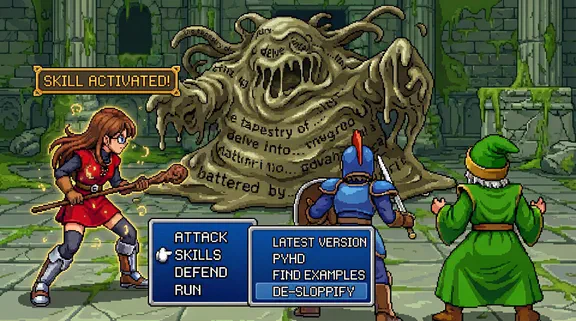
Mastering the creation of custom Agent Skills is the ultimate developer productivity boost. Explore practical use cases across documentation, workflows, and agent traits.
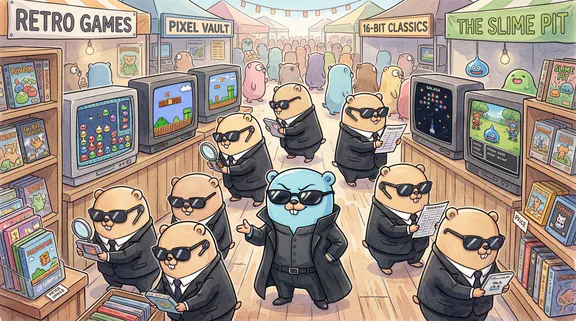
What does it actually take to build an autonomous agent in Go? We implement the same Retro Game Appraiser three ways to compare the Go GenAI SDK, Genkit, and ADK.
Why does language choice still matter in the age of AI? Explore Go’s high agentic affinity and learn how to configure Antigravity, MCP servers, and skills for Go.
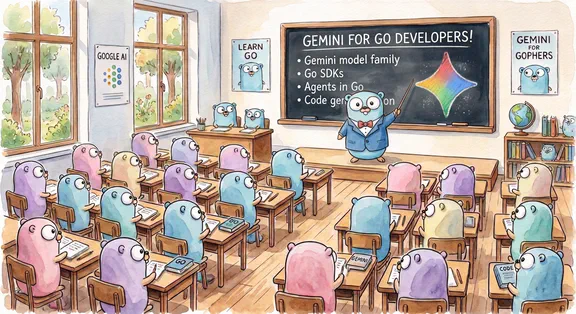
Not every task needs a frontier reasoning model. Learn how to navigate the Gemini model catalog, balance latency and cost, and call your first model in Go.
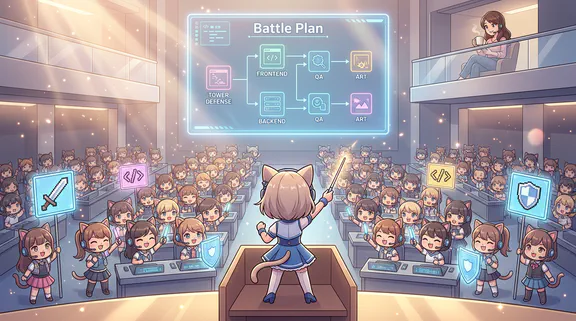
An exploration of the subagent paradigm in Antigravity, from its evolution and capabilities to practical applications. We also share a ‘swarm coding’ skill to help you orchestrate specialized subagents for complex engineering tasks.
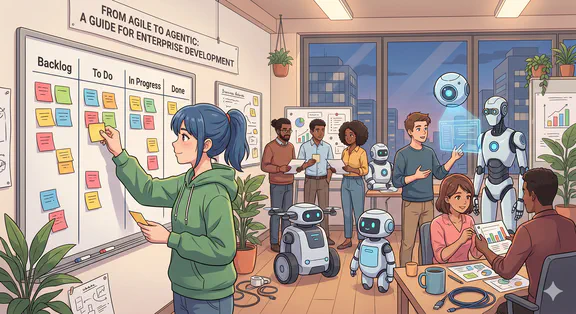
Explore the evolution of agentic coding. Update on the shift to planning systems, strategic agent skills, and orchestrating subagents for better outcomes.
A guide to the Google Antigravity 2.0 ecosystem announced at Google I/O 2026. We examine the standalone desktop application, the Go-based terminal CLI, and the programmatic Python SDK.
Learn how to use Gemini CLI’s built-in skill-creator to automatically generate, refine, and structure your own custom Agent Skills using practical examples.
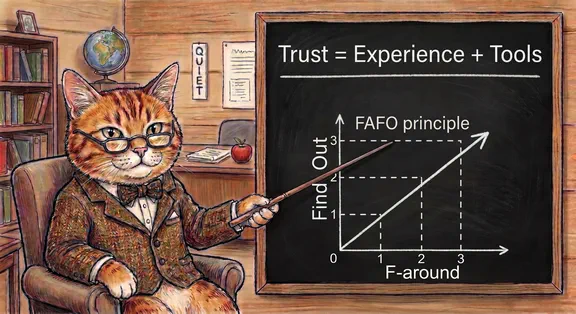
Taming AI agents requires science, not just vibes. Discover how A/B testing and statistical rigor turn coding agents into a measurable engineering discipline.
Reflecting on a transformative 2025: from joining Google and mastering vibe coding to building my own AI tools and finding a new rhythm in life and engineering.
Learn how to make your AI agent completely offline. We walk through swapping the cloud model for a local Qwen 2.5 via Ollama, and building a local RAG knowledge base using SQLite and sqlite-rag to query Osquery schemas and packs.
Elevate your Google ADK agent with a custom, retro-style interface. This step-by-step guide shows you how to replace the standard Dev-UI using FastAPI and vanilla JavaScript, adding personality with a real-time streaming, AI-generated avatar.
Celebrating my first six months at Google! Reflecting on a whirlwind of 15 events across 5 countries, diving deep into the AI ecosystem, and achieving a major personal health milestone along the way.
This article is a guide to creating a diagnostic agent with the Agent Development Kit (ADK). It covers the development process and explains how to use Vertex AI RAG to improve the agent’s response quality.
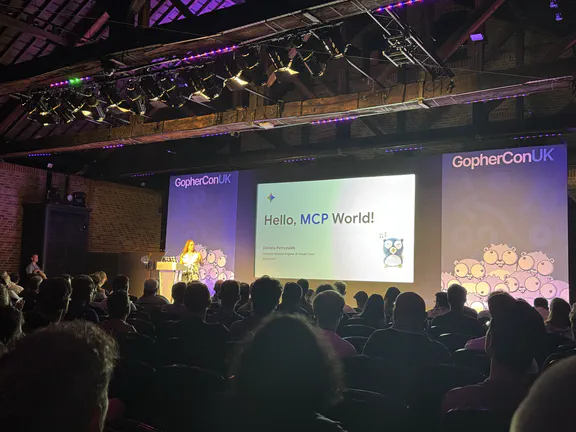
Based on my keynote at Gophercon UK 2025, this article is an introduction to the Model Context Protocol (MCP), exploring its core concepts, architecture, and the building blocks — Tools, Prompts, and Resources — used to create AI-enabled applications with Go.
An exploration into why time seems to speed up as we age, using a simple mathematical model to uncover a surprising truth about our perception of life.
The story of Speedgrapher, a custom MCP server for ‘vibe writing.’ It details the journey of turning a personal collection of prompts into a portable, AI-powered toolkit to automate and structure the creative process.